
7 Coaching Tools for ADHD Emotional Overwhelm
- Toqeer Chaudhary
- 3 days ago
- 4 min read

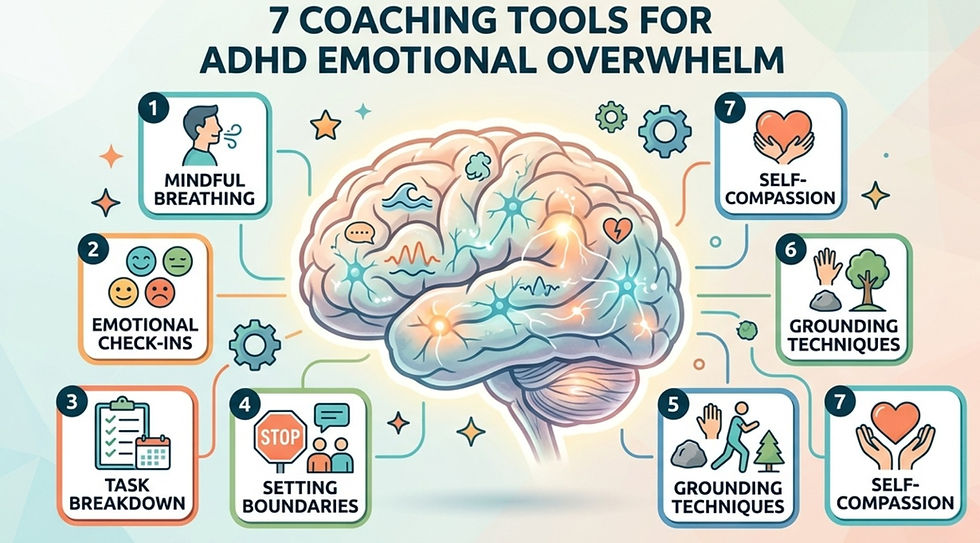
Do you ever feel like your brain just… shuts down when too much is happening?
Maybe your thoughts get loud. Your body feels tense. And suddenly, even simple things feel impossible to handle.
That heavy, flooded feeling? That’s emotional overwhelm—and if you have ADHD, you probably know it very well.
You’re not imagining it. And you’re definitely not alone.
Why Does ADHD Overwhelm Happen So Easily?
When everything hits at once—thoughts, emotions, noise, expectations—your brain has to filter it all.
But with ADHD, that “filter” doesn’t always hold up.
So instead of:
“I’ll deal with this step by step”
It feels like:
“This is too much. I can’t process any of it.”
Your brain’s “manager” (the part that helps you stay calm and organized) gets overloaded… And your emotional brain takes over.
That’s when overwhelm kicks in.
Here’s the Good News
You don’t need to stop your emotions.
You just need better ways to handle them when they show up.
These tools aren’t about “fixing” you. They’re about giving you space to breathe, think, and respond—before everything spirals.
7 Practical Tools to Handle Emotional Overwhelm
1. Pause and Name What You’re Feeling
When everything feels intense, try this:
Pause. Then say (even silently):“I’m feeling overwhelmed right now.”
It sounds simple, but it works.
Putting your feelings into words helps your brain slow down and regain control.
2. The Rule of Three (Stop Doing Everything at Once)
Overwhelm often comes from trying to handle too much at the same time.
Instead, ask yourself: “What are the 3 most important things right now?”
Ignore the rest—for now.
This gives your brain a clear path instead of chaos.
3. Ground Yourself in the Present (5-4-3-2-1 Method)
When your mind is racing, come back to your senses:
5 things you can see
4 things you can feel
3 things you can hear
2 things you can smell
1 thing you can taste
This pulls you out of the mental spiral and back into the present moment.
4. Don’t Do It Alone (Body Doubling)
Sometimes, just having someone around helps.
You don’t even need to talk.
Working beside someone—physically or virtually—can:
Calm your nervous system
Help you focus
Reduce emotional intensity
It’s a simple shift, but for many people, it’s a game-changer.
5. Move Your Body to Reset Your Mind
When emotions build up, they don’t just stay in your head—they sit in your body too.
Try:
A short walk
Stretching
Quick movement
Even a few minutes can release that built-up tension and help you reset.
6. Get Everything Out of Your Head (Brain Dump)
When your thoughts feel overwhelming, don’t try to organize them.
Just write everything down:
Tasks
Worries
Random thoughts
No structure. No pressure.
Getting it out of your head creates instant mental space.
7. Talk to Yourself Differently
This one is big.
When overwhelm hits, it’s easy to think:“Why am I like this?”“I should be able to handle this”
Instead, try:“My brain is overloaded right now. I just need a moment.”
That small shift reduces pressure—and helps you recover faster.
You Don’t Have to Figure This Out Alone
Reading tools is one thing. Actually using them in real life? That’s where most people struggle.
That’s why working with someone who understands ADHD can make such a difference.
A coach helps you:
Practice these tools in real situations
Figure out what actually works for your brain
Build consistency without feeling overwhelmed
This Isn’t About “Controlling” Your Emotions
Let’s be clear:
You don’t need to stop feeling deeply.
Your emotions are part of what makes you:
Creative
Intuitive
Passionate
The goal is simply to help you stay steady when things get intense.
Imagine This Instead…
You catch overwhelm before it takes over
You don’t lose your entire day to one moment
You feel more in control—even when things go wrong
That’s what happens when you build the right tools.
Ready to Feel More in Control?
If you’re tired of feeling mentally drained… If overwhelm keeps disrupting your day…
You don’t have to keep pushing through it alone.
With the right support, you can learn how to:
Manage emotional intensity
Build focus
Create systems that actually work for your life
If you’re ready, you can take the first step and book a discovery call.
No pressure—just a conversation to see what might help.
FAQs
What is the benefit of certified adhd coaching montreal?
It provides local, specialized support that understands the specific challenges adults with ADHD face, focusing on building practical executive functioning skills rather than just talking about problems.
How does a life coach for adhd adults differ from a friend's advice?
A coach is trained in specific neuro-affirming strategies and behavioral changes. They provide an objective, professional partnership designed to help you build sustainable habits.
What is ADHD emotional regulation?
It is the ability to manage and respond to emotional experiences in a way that is healthy and productive, rather than being overwhelmed or "hijacked" by big feelings.
Can these tools help with work-related stress?
Yes! Tools like the "Rule of Three" and "Brain Dumping" are incredibly effective for managing professional overwhelm and keeping your focus where it needs to be.
Why is self-compassion so important in ADHD coaching?
People with ADHD often deal with a lot of "internalized shame." Self-compassion lowers the stress response in the brain, making it easier to use your executive functions.
Is body doubling effective for everyone?
Many people with ADHD find it life-changing, but everyone is different. Your coach can help you experiment with different versions of body doubling to see what fits you.
How often should I practice these tools?
Ideally, you should practice them when you are not overwhelmed. This builds the "muscle memory" so that when the storm hits, your brain knows exactly what to do.
Do I need a diagnosis to work with a life coach for adhd adults?
No. Coaching is for anyone who struggles with executive functioning or emotional regulation and wants to build a more organized and peaceful life.
What should I expect in a discovery call?
It is a brief, friendly conversation to see if our coaching style matches your needs. We talk about your goals and how we can co-create a plan that works for you.
Is coaching better than just reading self-help books?
Books provide information, but coaching provides transformation. A coach keeps you accountable and helps you adapt strategies to your real-world situations.


